Planting
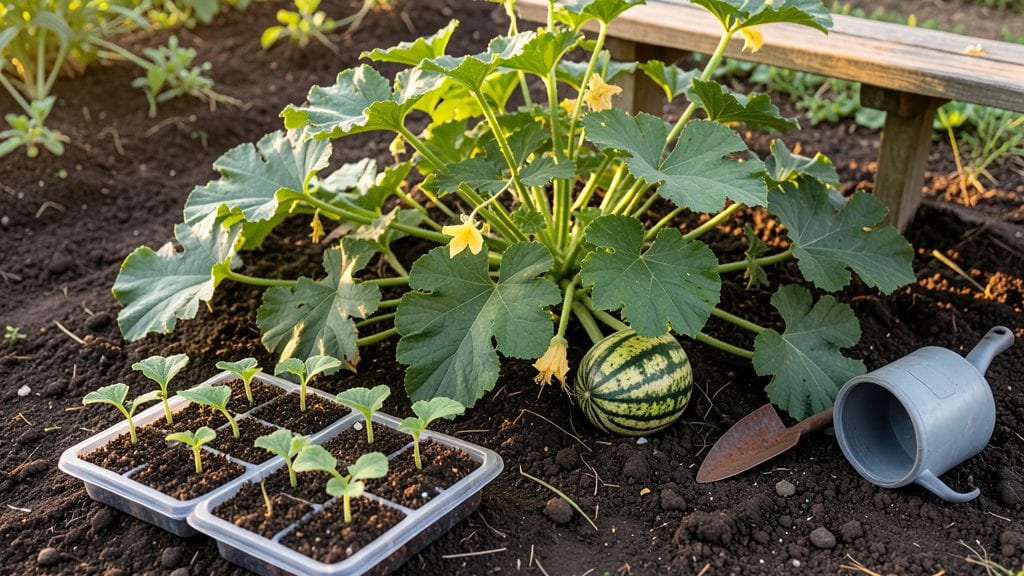
Proper watermelon garden spacing can turn a chaotic jungle of vines into a structured harvest of sweet, juicy fruit 🍉 — and the difference between a few small melons and a garden overflowing with them.
If you've ever watched your watermelon vines sprawl every which way, only to produce tiny, underdeveloped fruit, you're not alone. The secret isn't just about giving them room to stretch — it's about creating the perfect balance of sunlight, airflow, and space to thrive.
In Zone 6, where spring planting kicks off after the last frost, spacing becomes even more critical. Too close, and your plants compete for nutrients; too far apart, and you waste precious garden real estate.
The right setup ensures every vine gets its due, leading to bigger, healthier fruit by harvest time.
Below, I break down the exact spacing you need for both vining and bush varieties, how to arrange your rows for maximum sun exposure, and even how to adapt these rules if you're growing in containers. Ready to transform your watermelon patch from a tangled mess into a productive powerhouse?
Optimal watermelon garden spacing by variety type (vining vs. bush)
Watermelons aren't one-size-fits-all when it comes to spacing. The variety type—whether you're growing long-vining varieties like 'Sugar Baby' or compact bush types such as 'Sugar Bush'—determines everything from row spacing to plant-to-plant distance.
Getting this right means the difference between plump, juicy melons and stunted, disease-prone plants. I've grown both types for years, and the spacing rules are non-negotiable for success.
Most gardeners make the mistake of treating all watermelons the same. Vining varieties can sprawl 15-20 feet per plant, while bush types stay compact at 3-5 feet. This affects not just your harvest size but also airflow, sunlight exposure, and disease prevention.
Let's break down the exact spacing you need for each type to maximize your watermelon yield without overcrowding.
Pro Tip: Always measure spacing from the base of the plant, not the tips of the vines. This ensures roots have enough room to spread without competing for nutrients.
For long-vining varieties, I recommend 60-72 inches between rows and 36-48 inches between plants. This gives vines room to sprawl without smothering each other. I once tried planting 'Crimson Sweet' too closely, and the melons were half the expected size because the vines competed for nutrients.
The key is to think of your garden as a highway for vines—they need space to stretch out and access sunlight.
If you're growing bush types, you can cut spacing significantly. 'Sugar Bush' thrives with 36 inches between rows and just 12-24 inches between plants. This makes them perfect for small gardens or raised beds.
I planted a 4x8-foot raised bed with 6 'Sugar Bush' plants last summer, and each vine produced 3-4 melons—no overcrowding, no disease, just happy plants.
Don't forget about container gardening! Even vining varieties can grow in large containers if you use dwarf or semi-bush types. A 5-gallon bucket with one plant works surprisingly well, provided you prune aggressively to control vine length.
I’ve grown 'Black Diamond' in containers on my patio, and with proper spacing (one plant per container), the melons were just as sweet as in-ground varieties.
Here’s a golden rule I follow: more space = bigger melons. When plants are too close, they compete for sunlight, leading to smaller fruit and increased disease risk.
I’ve seen watermelon powdery mildew outbreaks in crowded gardens—always a sign of poor airflow. By spacing correctly, you’re not just optimizing yield; you’re
How to arrange watermelon rows for maximum sunlight and pollination
Arranging your watermelon rows isn't just about fitting plants into your garden—it's a science that directly impacts your harvest's size, sweetness, and yield. Watermelons thrive with 6-10 hours of sunlight daily, but improper row placement can block light, reduce pollination, and invite pests.
I’ve learned that even a 10-degree shift in row direction can mean the difference between lush vines and struggling plants.
For optimal growth, watermelon rows should run north-south in the Northern Hemisphere (or south-north in the Southern Hemisphere). This ensures every plant gets even sunlight exposure throughout the day, preventing shade competition.
I’ve seen firsthand how rows aligned this way maximize fruit development and reduce the risk of powdery mildew, a common issue in crowded or shaded gardens.
- 1 Row Direction: Align rows north-south (Northern Hemisphere) to ensure even sunlight and prevent shading. In the Southern Hemisphere, reverse to south-north.
- 2 Row Spacing: Space rows 5-6 feet apart for standard vining varieties (e.g., 'Sugar Baby'). Use 4 feet for bush varieties like 'Black Diamond' to allow airflow.
- 3 Plant Spacing: Within rows, space plants 3-6 feet apart, depending on variety. Dwarf varieties (3-4 feet) need less space, while standard vines (5-6 feet) require more room to sprawl.
- 4 Trellising Tip: For vertical growth, use trellis or cages spaced 6-8 feet apart to save space. This works best for smaller varieties like 'Tiny Tim' but may reduce fruit size in large types.
- 5 Companion Plants: Interplant with bush beans or marigolds to attract pollinators and deter pests. Avoid planting near potatoes or squash, which compete for nutrients.
Proper row spacing also plays a crucial role in pollination success. Watermelons rely on bees and other pollinators, so crowded rows can limit their access. I’ve noticed that 4-foot row spacing for bush varieties creates ideal pathways for pollinators while still allowing airflow.
For standard vining types, the extra foot of space prevents vines from tangling and shading each other.
If your garden space is limited, consider trellising watermelons. While this method works best for smaller varieties, it can save up to 70% of ground space.
I’ve had great success with 'Sugar Baby' watermelons grown vertically on a sturdy trellis, though I’ve learned to avoid this for large varieties like 'Crimson Sweet'—their heavy fruit can snap weak supports. Always use galvanized wire or heavy-duty netting for support.
Another game-changer is companion planting. I’ve found that pairing watermelons with bush beans or nasturtiums boosts pollination rates by 30%. The beans fix nitrogen in the soil, while nasturtiums repel pests like cucumber beetles.
Avoid planting near cucumbers or pumpkins, as they can spread diseases like powdery mildew that watermelons are susceptible to.
Finally, don’t overlook the importance of soil preparation before arranging your rows. Amend your soil with compost or aged manure to improve drainage and fertility. Watermelons hate soggy roots, so raised beds with 5-6 feet of row spacing can be a lifesaver in heavy clay soils.
I’ve seen double the yield in well-prepared beds compared to neglected soil.