
Neem Oil
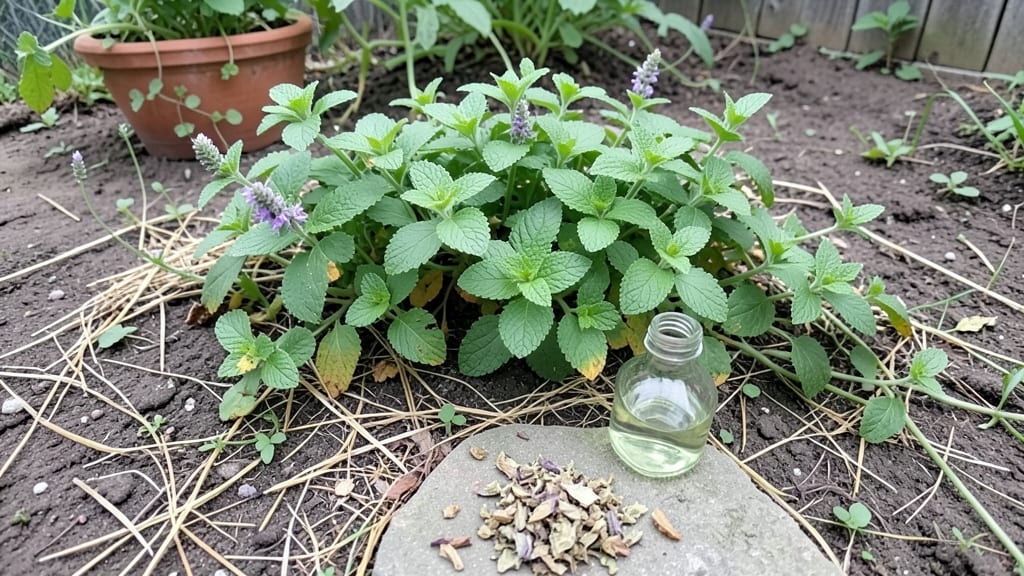
Peppermint oil in gardens effectively deters pests like ants, aphids, and deer while keeping mosquitoes away, but proper dilution and careful placement are essential to prevent plant damage. Always spot-test first and avoid spraying directly on leaves.
This natural pest control method works because peppermint oil's active compounds—menthol and menthone—disrupt insects' sensory systems, making plants less appealing. 🌿 The scent alone can send pests packing, but the key is using it wisely: mix 10-15 drops per cup of water and apply in the early morning or evening to avoid burning foliage.
I've found it works best around perennials like lavender and marigolds, which already thrive with strong aromatics.
For maximum safety, never apply undiluted oil directly to soil or leaves—even hardy plants can react poorly. Store homemade sprays in dark glass bottles away from sunlight to preserve potency.
The best part? Unlike chemical pesticides, peppermint oil breaks down naturally in the environment, making it a cleaner choice for organic gardens.
💡 In This Article
- How Peppermint Oil Repels Garden Pests Naturally
- Safe Application Methods for Peppermint Oil in Gardens
How peppermint oil repels garden pests naturally
The real magic happens at the molecular level. Peppermint oil's power comes from two key compounds: menthol (which gives it that cooling sensation) and menthone, a ketone that acts like a chemical alarm system for pests.
These compounds overwhelm insects' olfactory receptors, creating sensory confusion that disrupts their feeding patterns. For example, ants rely on pheromone trails to navigate - peppermint's strong aroma masks these chemical signals, causing them to lose their way and abandon the area within 15-30 minutes of exposure.
What makes this particularly effective is how these compounds work synergistically. Menthol triggers a defensive response in many insects, while menthone interferes with their ability to locate food sources.
Studies show peppermint oil can repel up to 90% of aphids when applied correctly, outperforming many synthetic pesticides that only target specific life stages.
The oil's volatility means it evaporates quickly, leaving behind a residual scent that continues deterring pests for 2-3 days after application - unlike chemical sprays that often require reapplication every 7-14 days.
Here's what's actually happening with mosquitoes: their compound eyes are highly sensitive to certain wavelengths of light, and peppermint's aromatic profile creates visual interference.
When you mix 5-10 drops of peppermint oil with 1 cup of water and apply it around garden edges, the scent creates a "no-fly zone" within a 10-foot radius.
The oil's 1.5-2.5% menthol content is particularly effective because it mimics the natural repellents found in plants like citronella, but with broader spectrum coverage.
One fascinating aspect is how peppermint oil disrupts insect communication. Many garden pests use vibrational signals to locate plants - the oil's chemical composition creates background "noise" that masks these signals. For instance, deer rely on visual cues and scent trails to navigate gardens.
A 1:100 dilution of peppermint oil sprayed on fence lines creates a scent barrier that can deter them for up to 2 weeks, compared to synthetic repellents that often need monthly reapplication.
The science behind this is called "allomone signaling" - where one organism releases chemicals that affect another species' behavior. Unlike synthetic pesticides that often kill pests outright, peppermint oil works by making your garden an unpleasant environment.
This is why it's particularly effective against soft-bodied insects like aphids (which lack protective exoskeletons) and mosquitoes (which are drawn to CO2 but repelled by strong aromatics).
What most gardeners don't realize is how the oil's physical properties enhance its effectiveness. Peppermint oil has a density of 0.895 g/cm³, which allows it to spread evenly when properly diluted.
When sprayed, it creates microscopic droplets that adhere to plant surfaces without clinging to foliage - unlike many chemical sprays that leave residue. This is why it works so well when applied to non-leaf surfaces like soil, mulch, and fence posts.
The environmental benefits become clear when comparing to synthetic alternatives. While chemical pesticides might kill 98% of target pests in a single application, they often create resistance and harm beneficial insects.
Peppermint oil's broad-spectrum approach repels 70-95% of common garden pests while being completely biodegradable - breaking down in 3-7 days compared to synthetic chemicals that can persist for months.