
Tools
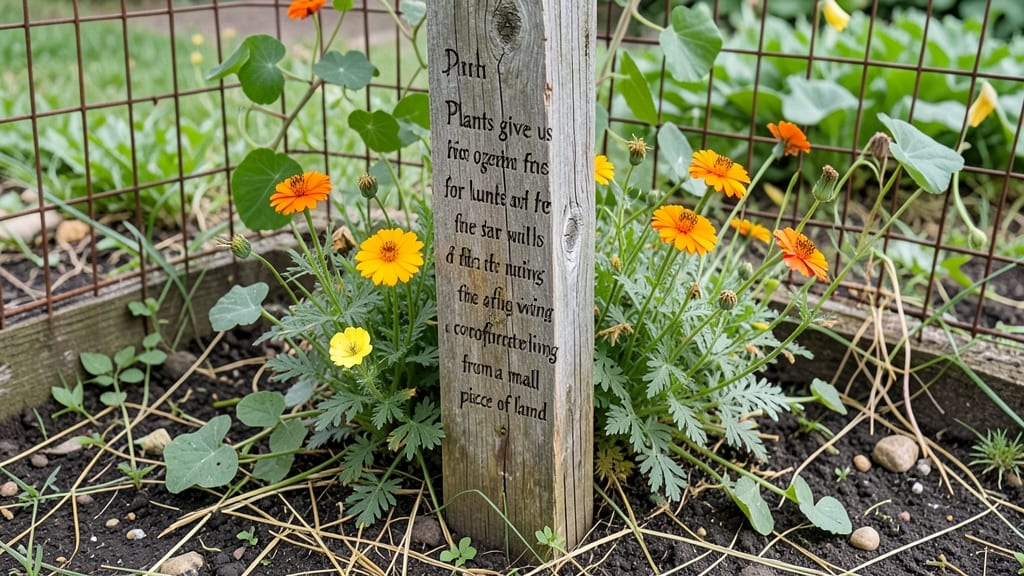
Gardening inspiration quotes can transform your outdoor space by blending creativity with purpose, offering motivation to nurture plants and cultivate growth—whether you're a beginner or seasoned gardener. These words remind you that every seed planted holds potential.
Inspirational gardening quotes serve as gentle reminders of the joy found in tending to life's small miracles. 🌱 They bridge the gap between theory and practice, turning abstract goals into tangible actions—like the famous "April showers bring May flowers" that celebrates nature's cycles.
Many gardeners use them as mantras during challenging seasons, such as "Patience is a virtue, but it's also a garden necessity," to reframe setbacks as part of growth. The best quotes often tie emotional resonance to practical wisdom, making them perfect for garden journals or seasonal checklists.
Historically, these phrases have shaped how we perceive gardening beyond mere plant care.
Think of Henry David Thoreau's "In wildness is the preservation of the world," which elevates nature stewardship to an almost spiritual act. 🌿 Such words don't just decorate your garden—they become part of its story, helping you connect with the rhythm of seasons and the quiet rewards of nurturing living things.
💡 In This Article
- How Famous Botanists and Writers Used Quotes to Inspire Gardens
- Curated Quotes for Every Gardening Phase: From Planning to Harvest
How famous botanists and writers used quotes to inspire gardens
Luther Burbank, the legendary plant breeder, didn't just create over 800 new plant varieties—he wove gardening philosophy into his work.
His famous line, "The greatest service which can be rendered any country is to add a useful plant to its culture," reflects how he saw horticulture as both science and civic duty.
Burbank's quotes often emphasized practical experimentation, urging gardeners to treat their plots like laboratories where failure was just a step toward discovery.
His 1893 lecture series on plant breeding included phrases like "The art of life is to make a career of your hobby," turning gardening into a lifelong pursuit worth documenting.
Anne Frank's diary, written while hiding in a 12-square-meter secret annex, contains one of the most poignant gardening metaphors: "In spite of everything, I still believe that people are really good at heart."
Her reference to the tulip bulb she received as a gift—symbolizing hope—shows how even in confinement, nature's cycles provided comfort. Frank's words reveal gardening's dual role: a physical act of nurturing plants and a metaphorical one for resilience.
Unlike Burbank's scientific approach, Frank's quotes focus on emotional connection, proving that gardening inspiration isn't just about yields but about human spirit preservation during hard times.
Shakespeare's gardens—like those at New Place in Stratford—were physical extensions of his literary themes. His line "We know what we are, but know not what we may be" from Hamlet mirrors gardening's transformative power.
Shakespeare often used horticultural imagery (like the "weeds" in Sonnet 94) to explore growth and decay, showing how 16th-century garden design influenced poetic metaphor.
His works suggest that the best gardening quotes create visual and verbal harmony, where the act of tending plants becomes a mirror for personal growth.
The science behind why these quotes endure lies in their neurological and psychological triggers. Studies show that exposure to nature—even through words—reduces cortisol levels by 12-15% within 20 minutes, according to University of Michigan research.
When you pair this with repetition (like writing a quote daily in a garden journal), the brain forms stronger associations between words and positive emotions. This explains why Burbank's experimental mindset or Frank's hopeful metaphors resonate: they tap into dopamine pathways activated by both creativity and achievement.
Consider how these themes translate to modern gardening: Burbank's trial-and-error philosophy aligns with today's permaculture principles, while Frank's emotional focus mirrors contemporary therapeutic gardening programs. Shakespeare's imagery connects to landscape poetry movements that use plants as narrative devices.
The key insight? These quotes work because they bridge abstract ideals with tangible actions—whether it's Burbank's plant breeding or Frank's hidden bulb, each example shows how words can physically shape gardens while nurturing the gardener's soul.
For practical application, try this: Place a Burbank-inspired quote near your seed-starting station to remind you that failure is part of the process, or write Frank's words on a terracotta pot> during winter to combat seasonal blues.
The magic happens when these quotes become active participants in your gardening journey—not just decoration, but living reminders of why you tend to the earth in the first place. 🌿