
Picking
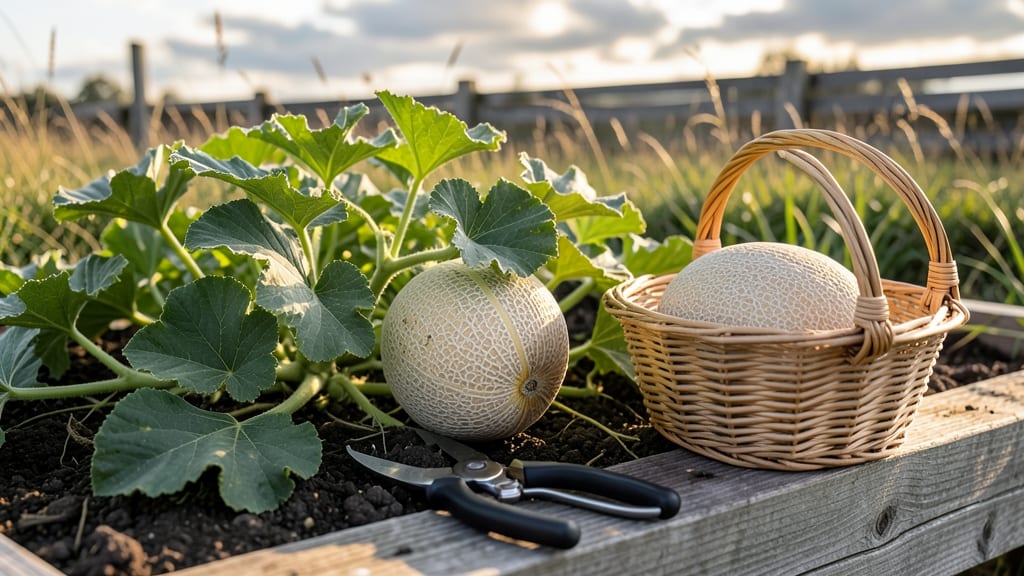
Harvesting cantaloupe from your garden at the perfect moment means the difference between a melon so sweet it melts in your mouth and one that’s still hard or mealy.
Picking too early means bland, underripe fruit that never develops its signature sweetness—while waiting too long risks overripeness and a mushy texture. The key is catching those 5 telltale signs that your 🍈 is ready, and I’ve got the exact cues to look for.
From the creamy-yellow rind to the way the stem detaches with a gentle twist, I’ll walk you through every visual and sensory clue so you never miss peak ripeness again. Plus, I’ll share the best time of day to harvest and how heat affects your timing.
By the end, you’ll know exactly when to pluck your cantaloupe for that perfect balance of sweetness and texture—no guesswork, just foolproof results.


5 Visual and physical signs your cantaloupe is ripe for harvesting
Cantaloupes are finicky about ripeness—pick too early, and you’ll end up with bland, seedy disappointment. But harvest at the perfect moment, and you’ll reward yourself with explosively sweet, juicy perfection.
The key lies in paying attention to five critical signs that tell you when your cantaloupe is ready to be plucked from the vine.
These indicators work together like a symphony, each playing its part to signal that your fruit has reached its peak. Ignore just one, and you risk missing the sweet spot. Let’s break down each visual and physical cue so you can confidently harvest cantaloupes that burst with flavor.
🍈 5 Signs Your Cantaloupe Is Perfectly Ripe
- 1. Vine Color Change: The vine near the fruit turns from green to brown and dries out. This signals the plant is redirecting nutrients to the melon.
- 2. Stem Separation: Gently twist the fruit—if it slips easily from the vine with slight pressure, it’s ready. No twisting? Wait a few days.
- 3. Sweet Aroma: A powerful, musky sweetness near the stem end means your cantaloupe is ripe. No scent? It’s not ready yet.
- 4. Skin Texture: The rind turns creamy-yellow or tan with a slight net pattern. Avoid green or dull-colored fruit—it’s underripe.
- 5. Weight & Sound: A ripe cantaloupe feels heavy for its size. Tap it—if it sounds hollow, it’s ready. A dull thud means it needs more time.
💡 Pro Tip: Check these signs morning to noon when the fruit is coolest and most accurate for testing.
Let’s dive deeper into each sign so you can master the art of harvesting cantaloupes at their peak. The vine color change is your first clue—when the stem near the fruit turns brown and dries out, it’s a clear signal that the plant is shutting down nutrients to that melon.
This usually happens about 3-5 days before the fruit is fully ripe, so keep an eye out for this early warning sign.
Next, the stem separation test is non-negotiable. Grab the cantaloupe and give it a gentle twist near the stem. If it detaches easily with just a little pressure, you’ve hit the sweet spot.
If it resists, leave it on the vine for another day or two. This test is foolproof—trust it over guesswork.
The aroma test is where cantaloupes reveal their true flavor potential. A ripe cantaloupe will emit a strong, sweet, almost floral scent near the stem end. If your nose isn’t tingling with sweetness, the fruit isn’t ready. This is your final confirmation before harvesting.
Don’t overlook the skin texture and color. A ripe cantaloupe’s rind should be creamy-yellow or tan with a distinct net pattern. If the rind is still green or dull, the fruit needs more time on the vine.
The color change isn’t just about looks—it’s a sign that the sugars inside have fully developed.
Finally, the weight and sound test gives you a physical confirmation. A ripe cantaloupe feels heavy for its size because it’s packed with juicy flesh. Tap it gently with your knuckles—if it sounds hollow, it’s ready to eat.
A dull thud means the seeds and flesh aren’t fully developed yet.
Putting all these signs together ensures you’ll never miss the perfect harvest window. When you see the vine turning brown, smell that musky sweetness, and feel the fruit slip easily from the vine, you’re ready to pick a cantaloupe that’s bursting with flavor.
Now, let’s talk about what happens if you miss these cues—or worse, harvest too early.
🌱
Common harvesting mistakes that ruin cantaloupe flavor (and how to avoid them)
Harvesting cantaloupe at the wrong time can turn your hard work into a disappointing, bland fruit experience. Overharvesting removes nutrients from the vine, while underharvesting leads to overripe, mushy melons. The key is knowing when to not pick—like avoiding nighttime harvesting or ignoring subtle vine signals that scream "wait!"
Even experienced gardeners sometimes rush the process, checking for ripeness too early or relying on guesswork. Timing matters—a cantaloupe picked too soon will lack sweetness, while one left too long on the vine can become mealy.
Let’s fix that with clear, actionable steps to ensure you harvest at peak flavor.
- Nighttime – Dew can weaken the fruit’s texture, making it prone to bruising.
- The rind is still green – Even if the vine signals ripeness, green skin means underripe fruit.
- You see cracks or soft spots – These indicate overripeness and poor storage life.
Harvesting at the wrong time ruins flavor and texture. Wait until all signs align for perfect cantaloupe!
One of the biggest mistakes is ignoring vine signals. A ripe cantaloupe’s vine will start drying out near the stem, and the fruit will slip easily when gently twisted.
If you’re unsure, perform the "thumb test": Press your thumb into the blossom end—it should yield slightly, like a ripe avocado.
Another common error is harvesting based on size alone. A cantaloupe might look big but still be firm and tasteless. Always check for a creamy-yellow rind with a slight sheen, a sweet aroma near the stem, and a dry, brown stem. These are non-negotiable signs of ripeness.
If you’re still unsure, try the "tap test". Give the cantaloupe a gentle knock—ripe fruit will sound hollow and slightly dull, not solid. Combine this with the vine’s signals for the best results. Patience pays off—waiting an extra day or two for perfect ripeness beats a mediocre harvest.
Finally, avoid storing harvested cantaloupe in the fridge immediately—let it ripen at room temperature for 1-2 days first. Cold storage too soon can dull flavor and texture. Once ripe, keep it in the fridge for up to 5-7 days to preserve freshness.