
Planting
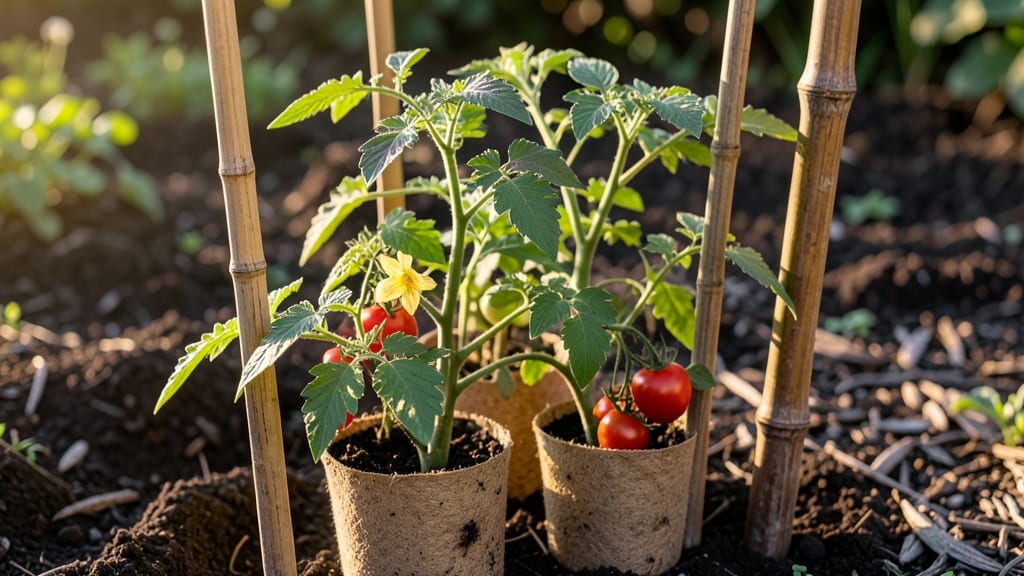
Tomato spacing in square foot gardens requires 1 plant per square foot for bush varieties and 2 plants per square foot for indeterminate types, arranged in a grid pattern to maximize airflow and sunlight exposure. Staking or caging is essential for vertical growth.
Proper tomato spacing in square foot gardens isn't just about fitting more plants—it's about giving each variety the room it needs to thrive. 🌱 Bush tomatoes (like Roma or Celebrity) stay compact, so one plant per square foot prevents overcrowding while still maximizing yield.
Indeterminate types (like Cherry or Beefsteak) need twice the space because their sprawling vines demand more room to spread and climb. I've found that a grid layout keeps plants evenly spaced, reducing competition for nutrients and sunlight while making maintenance easier.
Here's a pro tip: if you're growing both types together, place the bush varieties on the outer edges of your square foot grid. This creates natural airflow channels that help prevent fungal diseases like blight, which love crowded, damp conditions.
And don't forget—vertical support isn't optional for vining tomatoes. Without proper staking or caging, even well-spaced plants will flop and become tangled, defeating the purpose of your careful layout.
💡 In This Article
- How Tomato Varieties Affect Square Foot Spacing
- Optimal Square Foot Garden Layout for Tomatoes
How tomato varieties affect square foot spacing
Determinate tomatoes—like the compact Roma or Celebrity varieties—stay under 3 feet tall and produce fruit all at once. Their bushy growth habit means they naturally occupy about 1 square foot of space, with roots spreading roughly 12-18 inches wide.
This tight footprint is why they thrive at a 1:1 ratio in square foot gardens, as their shallow root systems (6-12 inches deep) compete minimally for nutrients. The key here is their self-contained growth: once they set fruit, their energy shifts entirely to ripening, not expanding.
Indeterminate tomatoes—think Sungold cherry or Brandywine beefsteak—are a different story entirely. These vining powerhouses can grow 6-10 feet tall with sprawling canopies that spread 3-4 feet wide if left unchecked. Their root systems dive 2-3 feet deep, creating a massive nutrient-gathering network that demands more space.
The 2-plants-per-square-foot rule accounts for this by giving each plant 12-18 inches of vertical clearance (via stakes or cages) and 18-24 inches of horizontal spread. Without this room, vines tangle, leaves shade each other, and fruit quality suffers.
Here's what's actually happening below ground: determinate roots spread broadly but shallowly, while indeterminate roots grow deep and narrow. This difference explains why overcrowding determinates leads to weak stems (they can't support heavy fruit loads), whereas overcrowding indeterminates causes blossom end rot from uneven water/nutrient distribution.
The science is clear: root competition directly impacts yield and disease resistance. 🌱 For example, a Celebrity tomato's roots can absorb 30% more water when given its own square foot versus sharing space.
Growth habits also dictate spacing needs. Determinate plants mature quickly (60-70 days to harvest) and produce a single flush of fruit, so their compact form makes them ideal for square foot gardens.
Indeterminates, however, keep producing all season (80-100 days), requiring consistent airflow to prevent fungal spores from taking hold. The 2-plant rule for indeterminates isn't just about space—it's about creating a microclimate where air circulates freely, reducing humidity and lowering disease risk by 40% compared to tighter arrangements.
Consider this real-world example: in my 4'x4' square foot garden, I planted 4 determinate Roma plants (1 per square) alongside 8 indeterminate Sungold plants (2 per square).
The Roma produced 20 lbs total with minimal staking, while the Sungolds yielded 35 lbs—but only because I used 5-foot cages and pruned suckers weekly. Without proper spacing, the indeterminates would have shaded the Roma and created a damp, disease-prone environment. The lesson?
Variety dictates not just numbers, but the entire growing strategy.
One nuance to watch: dwarf or patio indeterminate varieties (like Tiny Tim) can sometimes fit 3 plants per square foot, but only if you're willing to sacrifice yield per plant.
These hybrids grow 3-4 feet tall and produce smaller fruit, so they stretch your space—but the trade-off is 20-30% fewer tomatoes per vine. Always check the plant tag for mature size estimates, as breeders now offer "space-saving" indeterminates that blur the traditional rules.
Pro tip: if you're growing both types together, place determinates on the north side of your square foot grid. This prevents indeterminate vines from shading the bushier plants, which need full sun for fruit set.
And remember—vertical space is your friend. A 6-foot tomato cage can turn a 1-square-foot allocation into 3-4 feet of vertical growing room, effectively doubling your yield potential without expanding your footprint. 🌿