Flowers
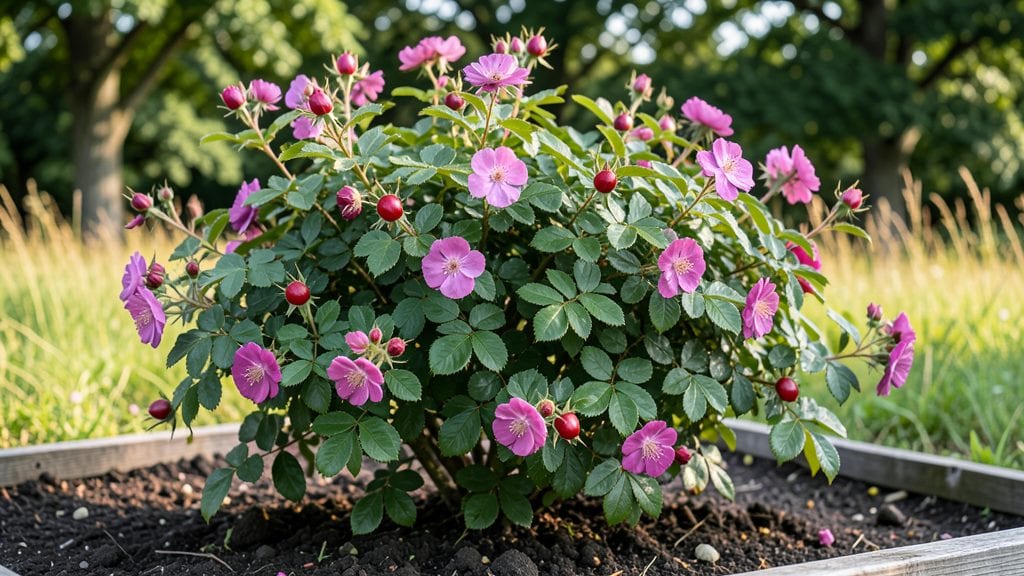
Thorny garden flowers aren't just for roses anymore—they're the secret weapon behind lush, impenetrable borders that scream "private" while looking like a designer did it. 🌿 I've turned my back fence into a fragrant, thorny fortress using barberries, honeysuckles, and old-fashioned roses, and the best part?
It's never looked better than it does right now, even in winter.
The magic happens when you mix three key elements: height variation (tall roses at the back, medium barberries in the middle, low honeysuckle at the front), season-long color (spring blooms, summer foliage, fall berries), and that natural barrier effect where no one dares to climb through.
My neighbors actually ask which landscaping company I used—until I tell them it's all thorny perennials.
You'll end up with a garden that feels like a secret garden—wild but intentional, with blooms from May through October and berries that feed birds year-round. The thorns keep critters out, but the scent keeps you in, creating that perfect balance of security and charm.
Plus, once established, these plants need almost no maintenance beyond an annual prune.
Works equally well for cottage-style gardens, modern privacy screens, or even urban backyards where space is tight. The key is spacing: 3-4 feet apart for roses, 2-3 feet for barberries, and 1-2 feet for honeysuckle vines. Let's design your thorny haven!
📚 In This Guide
- What you need
- Instructions
- Tips and common mistakes
- Wrapping up and next steps
What you need
- ● Thorny flowering plants (5–10 plants per linear foot): Pyracantha (Firethorn) – 3–5 plants
- ● Rosa rugosa (Rugosa Rose) – 2–3 plants
- ● Berberis thunbergii (Barberry) – 3–4 plants
- ● Goumi berry (Elæagnus × reflexa) – 2–3 plants
- ● Hawthorn (Crataegus spp.) – 2–3 plants
- ● Soil amendments (per 10 sq. ft.): Compost (2–3 bags)
- ● Organic mulch (2–3 cubic feet)
- ● Slow-release fertilizer (10–20 lbs, 10-10-10 NPK ratio)
- ● Support structures (as needed): T-posts or wooden stakes (1 per plant)
- ● Garden twine or wire mesh (for climbing roses)
- ● Garden shovel or spade
- ● Pruning shears (sharp & sterilized)
- ● Measuring tape (25+ ft)
- ● Gloves (thorn-proof recommended!)
- ● Watering can or hose with nozzle
- ● Wheelbarrow (for soil/mulch)
- ● Drip irrigation system (for low-maintenance watering)
- ● Edging stones (to define garden borders)
- ● Decorative stakes or plant labels (for a polished look)
- ● Birdhouses or feeders (to attract pollinators & deter pests)
- ● Post-hole digger (if planting deep-rooted varieties)
How to design a living privacy barrier with thorny garden flowers
Here's my approach to creating a lush, impenetrable screen that thrives year-round with minimal upkeep.
🌱 Step 1: Select the Right Thorny Varieties for Your Climate
Choose plants that match your hardiness zone and sunlight conditions. I recommend starting with roses (like 'Dr. Huey' or 'Gladiator'), pyracantha (for berries and dense growth), and barberry (tolerates poor soil). These three alone create an almost impenetrable hedge with natural beauty. Research local nurseries for native thorny shrubs like hawthorn or blackthorn—they're often underused but incredibly tough.
Plant in groups of 3-5 per section to ensure immediate density. The key is layering: taller varieties (like 9-foot pyracantha) at the back, medium (6-foot roses) in the middle, and low (3-foot barberry) at the front. This creates visual interest while maintaining privacy from top to bottom. I always sketch a simple layout first—trust me, it saves headaches later when you realize you've planted all the tall ones in one corner.
🪴 Step 2: Prepare the Planting Site for Maximum Growth
Clear the area of weeds and grass, then dig a trench twice as wide as the root ball and 12 inches deep. Amend the native soil with 3 gallons of compost per plant and 1 pound of 10-10-10 fertilizer spread evenly. Thorny plants need excellent drainage—if your soil stays soggy, add 2 inches of coarse sand to the bottom of each hole before planting. I've seen pyracantha roots rot out in heavy clay within a season.
Space plants 3-4 feet apart for roses and barberry, 4-5 feet apart for pyracantha—they'll spread aggressively. The first year focuses on root establishment, so don't crowd them. Water deeply before planting to help roots settle. I like to make a small mound of soil in the center of each hole, place the plant on top, then fill around it—this prevents air pockets that can strangle roots.
☀️ Step 3: Plant and Stake for Wind Protection
Position each plant so the top of the root ball sits 1 inch above soil level—this prevents rot. Backfill with native soil mixed with compost, firming gently as you go. Install 3-foot bamboo stakes for each plant and tie stems loosely with soft plant ties (not wire—they cut into bark). Thorny plants need support their first year, especially in windy areas. I've seen newly planted pyracantha flop over and take weeks to recover.
Water immediately after planting to eliminate air gaps. Give each plant 1 gallon of water per foot of height—so a 6-foot rose gets 6 gallons total. Mulch with 2 inches of wood chips, keeping it 6 inches away from stems to prevent rot. This conserves moisture and suppresses weeds, which compete aggressively with young thorny plants. The mulch also regulates soil temperature, helping roots establish faster in both hot and cold climates.
✂️ Step 4: Prune for Density and Health
Prune in early spring before new growth begins. Remove dead, crossing, or weak branches first—this improves airflow and reduces disease. For roses, cut back one-third of the oldest canes to encourage new growth. Pyracantha responds well to hard pruning: cut all branches back by half to stimulate dense regrowth. Barberry tolerates light pruning—just trim to shape and remove any leggy growth.
I always sterilize my pruners with rubbing alcohol between cuts to prevent spreading fire blight or other diseases. The goal is to create a tight, bushy structure by summer. Avoid heavy summer pruning—thorny plants need their foliage to photosynthesize and build energy for winter. If you must prune in summer, do it early in the season and keep it minimal. You'll see dramatic improvement in density within 2-3 years if you stick to this schedule.
💧 Step 5: Maintain Through Seasons for Long-Term Privacy
Water deeply once a week during the first growing season, aiming for 1-2 inches of moisture per week. Once established, most thorny plants tolerate drought, but newly planted specimens need consistent moisture to root. I check soil moisture by sticking my finger 2 inches deep—if it's dry, water; if damp, wait. Overwatering is the fastest way to kill these tough plants.
Fertilize once in early spring with ½ pound of 10-10-10 fertilizer per plant, then again in early summer with ½ pound of 5-10-10 (lower nitrogen encourages flowering). In fall, apply 1 inch of compost around the base and mulch again. Thorny plants are generally low-maintenance, but this seasonal care keeps them thriving. By year three, your barrier will be nearly impenetrable—and far more beautiful than any fence.
Tips & tricks for perfect thorny garden flower privacy barriers
Creating a natural privacy screen with thorny plants requires strategic planning—here are the game-changing details that separate a good hedge from a truly impenetrable one.
Layering Strategy: The key to visual interest and complete privacy lies in your Step 1 layering approach. For maximum impact, I recommend adding evergreen varieties like holly (optional) to your mix—they provide year-round coverage while roses and pyracantha handle seasonal changes. Place holly at the front if using, followed by barberry, then roses in the middle, and pyracantha at the back. This creates a natural gradient that's both functional and beautiful. Think of it as architectural design where each plant plays a specific role in the overall structure.
Soil Preparation Secret: When amending soil in Step 2, don't just mix compost and fertilizer—create a proper soil profile. In the bottom of each hole, add a 2-inch layer of coarse gravel (instead of sand) for better long-term drainage, especially in clay soils. Then layer your amended soil on top. This prevents the dreaded "pyracantha rot" I've seen in heavy soils. The gravel also helps regulate soil temperature, which is crucial for root development in both hot and cold climates.
Pruning Precision: During your early spring pruning in Step 4, focus on creating an "open center" shape rather than a perfect dome. This allows sunlight to penetrate to the center of your barrier, encouraging bushier growth throughout. For roses specifically, make your cuts at a 45-degree angle just above an outward-facing bud. This technique promotes better air circulation and stronger new growth. I've seen pruned roses grow back with twice the density when using this method compared to straight cuts.
Seasonal Maintenance Calendar: Create a simple seasonal checklist based on Step 5 guidelines. Mark your calendar for:
- Early March: Apply pre-emergent herbicide (optional) to prevent weed competition
- Late May: Second watering check—this is when most thorny plants establish their root systems
- October: Add a 3-inch layer of leaves around the base for winter insulation
This proactive approach prevents the common pitfall of summer water stress and winter dieback that I've observed in many neglected privacy screens.
Pro Tips for Thorny Garden Flowers
- Creating a natural privacy screen with thorny plants requires strategic planning—here are the game-changing details that separate a good hedge from a truly impenetrable one.
- Layering Strategy: The key to visual interest and complete privacy lies in your Step 1 layering approach.
- Soil Preparation Secret: When amending soil in Step 2, don't just mix compost and fertilizer—create a proper soil profile.
Frequently asked questions
Got questions about growing thorny garden flowers for privacy? Here are some answers to help you navigate the prickly details with confidence!
What are the best thorny flowers for a fast-growing privacy screen?
For quick results, opt for Pyracantha (firethorn) or Berberis thunbergii (Japanese barberry). Both grow 3–5 feet per year and develop dense, thorny foliage. Rosa rugosa (rugged rose) is another excellent choice, though it takes 2–3 years to fully establish.
How long does it take for thorny plants to create a full privacy barrier?
Most thorny shrubs take 2–5 years to form a solid barrier, depending on the species. Fast growers like Pyracantha can reach 6–8 feet in 3–4 years, while slower varieties (e.g., Rosa rugosa) may need 5+ years. Planting in rows or layers speeds up coverage!
Are thorny flowers dangerous to pets or children?
Most thorny flowers are non-toxic but can cause scratches or punctures. Berberis and Pyracantha are generally pet-safe, but Rosa rugosa hips (berries) are edible but may irritate sensitive stomachs. Keep kids and pets away from dense foliage to avoid snags. Always research specific varieties!
Can I grow thorny flowers in containers or small spaces?
Yes! Dwarf varieties like Berberis thunbergii ‘Rose Glow’ or Pyracantha ‘Tiny Wine’ thrive in containers (15–20 gallon pots). Just ensure they get 6+ hours of sun and well-draining soil. Prune regularly to control size—thorny plants in pots still offer privacy without sprawling.
How do I handle thorns when pruning or maintaining these plants?
Wear thick gloves (leather or heavy-duty gardening gloves) and long sleeves to avoid scratches. Use long-handled pruners or loppers for hard-to-reach branches. After pruning, dip tools in rubbing alcohol to prevent sap-borne diseases. Never prune wet foliage—thorns are sharper when damp!
What are some thorn-free alternatives for privacy?
If thorns aren’t your style, try Bamboo (fast-growing but invasive), Arborvitae (evergreen, deer-resistant), or Forsythia (bright yellow blooms). For floral options, Hydrangeas or Weigela offer lush screens without thorns—just sacrifice the natural barrier’s extra security!
Wrapping up and next steps
Transforming your garden into a lush, private retreat with thorny garden flowers is easier—and more rewarding—than you think! These plants offer year-round beauty and security while requiring minimal fuss. Whether you’re drawn to roses, pyracantha, or holly, the key is choosing the right mix for your climate and space.
Ready to take the next step? Sketch a quick layout of your garden, pick 2-3 of your favorite thorny varieties, and start small—even a single row can make a difference! 🌿 With a little patience and care, your private oasis will thrive, blooming with both charm and protection.