
Tools
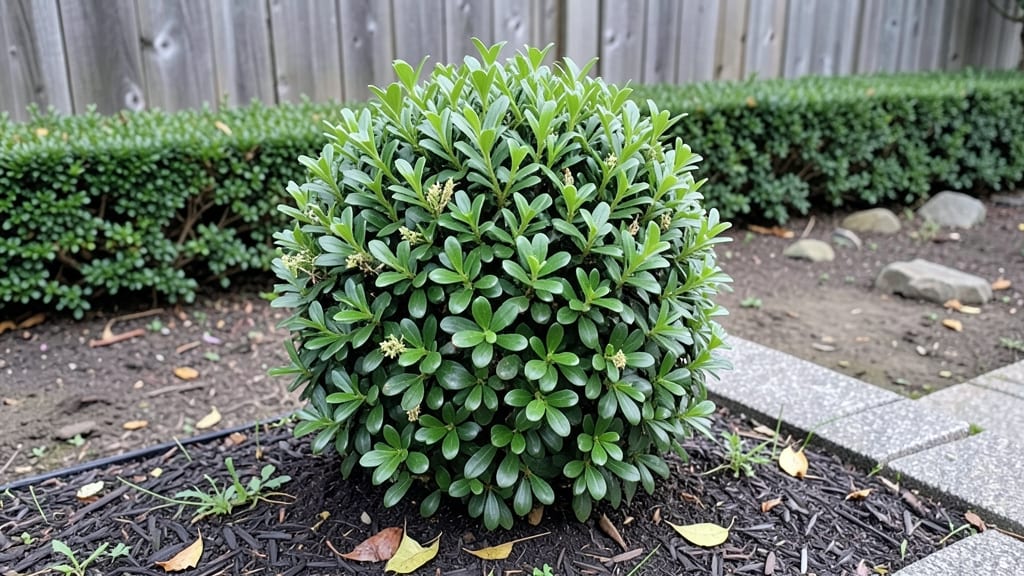
A small formal garden thrives on deliberate design: structured layouts, balanced proportions, and carefully chosen plants create visual harmony in tight spaces. Focus on clean lines, repetition, and high-contrast elements to make every inch feel intentional.
A small formal garden isn't about size—it's about control. 🔥 By using axial pathways (like straight borders or gravel paths) and repetitive plant clusters, you trick the eye into seeing more space than you actually have.
Think boxwood hedges in perfect squares or box parterres filled with boxwood and lavender—these classic elements scale beautifully even in 10x10-foot areas. The key is consistency: repeat colors, textures, and shapes throughout to reinforce the structured feel.
For example, pairing dwarf yews in rectangular patterns with gravel pathways instantly adds formality without clutter.
💡 In This Article
- Symmetry and Geometric Layouts for Small Formal Gardens
- Best Plants and Materials for Compact Formal Gardens
Symmetry and geometric layouts for small formal gardens
The secret to making small spaces feel grand lies in how you manipulate geometry. Formal gardens rely on axial alignment—imaginary lines that draw the eye through the space—creating a sense of depth even in tight areas.
For example, a 6-foot-wide gravel path centered between two 2-foot-tall boxwood hedges instantly establishes a formal axis.
This works because our brains perceive parallel lines as extending infinitely, making the space feel larger than it is. 🔥 The key is maintaining this alignment throughout the design, whether through plant placement, hardscaping, or even the positioning of decorative elements like urns or benches.
Geometric shapes are your best tools for visual impact. A 4x4-foot square parterre filled with lavender and thyme creates a bold focal point that anchors the space.
Circles work wonders in small areas too—consider a 3-foot-diameter knot garden (a tightly clipped design with intertwined patterns) made from dwarf creeping thyme or rosemary. These shapes force the eye to follow their edges, which subconsciously makes the space feel more structured.
The repetition of these shapes—say, two identical square planters flanking a doorway—reinforces the formal aesthetic while adding visual rhythm.
Urban balconies and narrow yards present unique challenges, but the same principles apply. For a 5-foot-wide balcony, use vertical symmetry with two matching dwarf citrus trees in 12-inch pots placed equidistant from the center. Add a 1-foot-wide gravel strip down the middle to create that all-important axial line.
In ground-level spaces, low hedges (18-24 inches tall) trained into geometric shapes—like a rectangular boxwood hedge with a circular opening in the center—can frame views and add dimension without overwhelming the space.
Material choices amplify the geometric effect. Pavers in precise patterns (like herringbone or straight-set) guide the eye along pathways, while gravel in crisp, straight lines adds contrast to soft plant forms. For example, pairing light-colored gravel with dark green boxwood creates high visual contrast that makes shapes pop.
Even small details—like metal edging around a circular bed—enhance the formal feel. The trick is to let the materials echo the plant shapes: if your design uses squares, incorporate pavers in square tiles or gravel bordered by square metal edging.
Don't overlook the power of negative space. In formal gardens, what you don't plant is just as important as what you do. A 2-foot-wide gravel path between two 3-foot-tall hedges creates a visual "breathing room" that makes the space feel more expansive.
This works because our eyes naturally follow the clean lines of the path, which appear to extend beyond the actual boundaries. For urban spaces, consider vertical negative space—like leaving 12 inches of wall space between plants to create an airy, structured look.
Here's what most people miss: the scaling effect of repetition. Plant the same dwarf shrub (like Japanese holly) in three identical 18-inch pots along a path, and your brain will register this as a deliberate pattern rather than random placement.
The repetition creates a sense of order that makes the space feel intentional and complete. For maximum impact, repeat not just plants but also colors—like three lavender spikes in purple planters—to tie the design together. 💫