
Tools
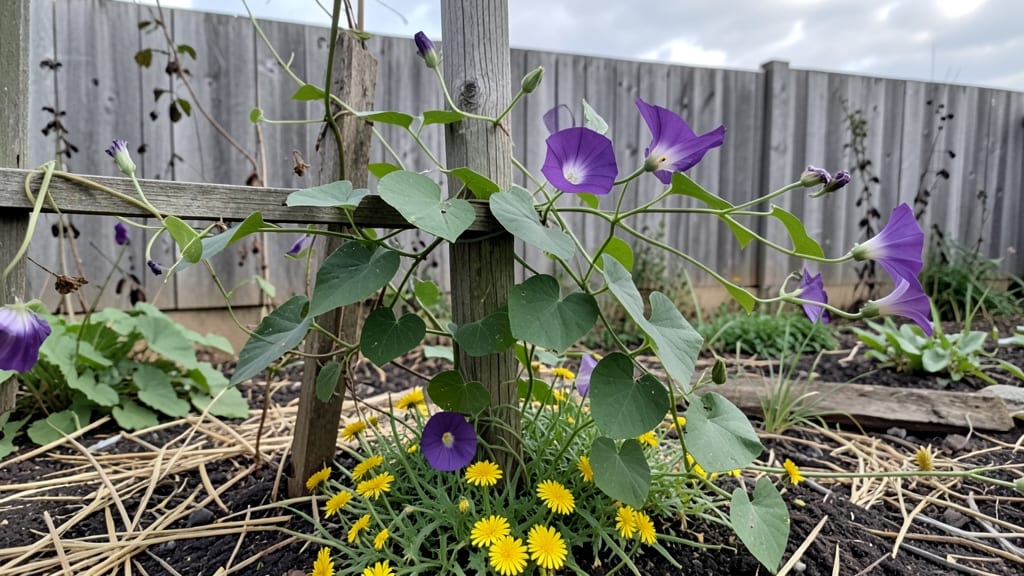
Creating a morning glory garden that bursts with color feels like inviting summer to move in permanently. 🌿 I’ll never forget the first time I saw my trellis explode with sky-blue blooms—it transformed a plain fence into a living waterfall of flowers.
These vines grow faster than weeds, climbing anything in their path, and they keep blooming from June until frost. The secret isn’t just planting them; it’s designing a space where they become the star without overpowering the rest of your garden.
You’ll need just a few basics: sturdy trellises, obelisks, or even a simple chain-link fence for vertical support, plus some well-draining soil. Morning glories thrive in full sun and don’t fuss over soil quality, making them perfect for beginners or anyone with a busy schedule.
Pair them with companion plants like marigolds (to deter pests) or nasturtiums (for a pop of color), and you’ll have a low-maintenance, high-impact display that neighbors will envy. The best part? They self-seed like crazy, so once you’ve got them, you’ve got them forever.
Imagine waking up to a trellis draped in lavender or pink blooms, or a hanging basket spilling over with deep purple flowers. These vines work in every garden style—cottage gardens, modern vertical gardens, or even wildflower meadows.
They’ll climb, trail, or spill, depending on how you train them, and their fast growth means you’ll see results in just a few weeks. The key is to give them room to spread and mix in textures with grasses or shrubs to create depth.
Here’s the game-changer: morning glories aren’t just pretty—they’re practical. Use them to hide unsightly fences, soften harsh lines in modern gardens, or create a romantic arbor for a seating area. And if you’re feeling adventurous, try growing them in containers or even as ground covers for a lush, trailing effect.
The possibilities are endless, and the best part? You won’t spend all summer deadheading or fussing over them. Just plant, water, and enjoy the show.
📚 In This Guide
- What you need
- Instructions
- Tips and common mistakes
- Wrapping up and next steps
What you need
- ● Morning glory seeds or plants: Choose fast-growing varieties like Ipomoea purpurea (heavenly blue) or Ipomoea nil (Japanese morning glory). Start with 5–10 plants for a small vertical display or 20+ for a bold statement.
- ● Vertical trellis or support: DIY option: Wooden lattice panels (4’x8’), PVC pipes, or sturdy wire mesh (1/2"–3/4" grid). Measure at least 6–8 feet tall for full growth.
- ● Pre-made: Apex trellis, obelisk, or A-frame structure (ensure it’s galvanized or weather-resistant).
- ● Potting soil: 1–2 cubic yards of high-quality, well-draining potting mix (e.g., Miracle-Gro or FoxFarm Ocean Forest). Add perlite or vermiculite (20% mix) for aeration.
- ● Containers or planters: For trellises: Large fabric grow bags (5–10 gallons each) or hanging planters with drainage holes.
- ● For ground planting: Raised beds or in-ground plots (amend soil with compost if needed).
- ● Fertilizer: Slow-release granular fertilizer (e.g., 10-10-10) or liquid seaweed extract for a gentle boost.
- ● Watering system: Drip irrigation or a soaker hose (morning glories love consistent moisture!).
- ● Pruning shears: Sharp, bypass pruners for trimming vines as they grow.
- ● Mulch: Straw or shredded bark to retain moisture and suppress weeds.
- ● Epsom salt: A tablespoon per plant monthly for magnesium (boosts blooms!).
- ● Trellis decor: Solar-powered lights or colorful ribbons to enhance the aesthetic.
- ● Companion plants: Marigolds or nasturtiums to deter pests naturally.
- ● Shade cloth: Lightweight (30–50%) for hot climates to prevent wilting.
Step-by-step instructions for planting a stunning morning glory garden
Here's my foolproof method for creating a vertical paradise of blue, purple, and pink blooms that'll have your neighbors asking for tips.
🌱 Step 1: Choose Your Planting Location and Trellis
Morning glories thrive in full sun—at least 6-8 hours daily. I always pick a south-facing wall or fence where the vines will get maximum light. The trellis should be 6-8 feet tall to give those lanky stems room to climb. A sturdy metal or wooden lattice works best, but even a simple string trellis will do in a pinch.
Install the trellis before planting so you won't disturb roots later. I like to bury the base posts 6 inches deep for stability, especially in windy areas. The key is spacing—place your trellis 3-4 feet away from any structure to prevent mold growth from trapped moisture.
🌱 Step 2: Prepare the Soil and Plant Your Seeds
Morning glories aren't picky about soil, but they do best in well-draining, fertile ground. Mix 2 inches of compost into the top 6 inches of soil where you'll plant. These seeds germinate best in warm soil (70-80°F), so wait until after your last frost date—usually late spring when nighttime temps stay above 55°F.
Scatter seeds ½ inch deep and 6 inches apart at the base of your trellis. I like to plant in a slight trench to help water pool around the seeds. Water gently but thoroughly after planting—you want the soil 1 inch deep to feel consistently moist, not soggy. Don't cover with mulch yet; you'll want to see those first sprouts!
💧 Step 3: Water and Support Early Growth
Keep the soil evenly moist until seedlings reach 6 inches tall—about 2-3 weeks. You'll see the first true leaves emerge in 7-14 days, and that's your signal to start training them. Once seedlings appear, gently guide the vines toward the trellis using soft twine or your fingers. Never force them; morning glories climb naturally when given something to hold onto.
Here's the thing—morning glories grow fast! Once they hit 12 inches tall, reduce watering to 1-2 times weekly unless it's extremely hot. Overwatering causes the vines to grow too soft and prone to breaking. Watch for new tendrils at leaf nodes—these are how they attach to your trellis.
☀️ Step 4: Maintain and Encourage Nonstop Blooms
After the first flush of flowers appears (usually 6-8 weeks after planting), pinch off spent blooms daily to encourage more production. This is called deadheading, and it's the secret to your nonstop summer display. I set a timer for 8 AM because morning glories close by midday—removing yesterday's flowers gives today's buds room to shine.
Feed your vines every 4-6 weeks with a balanced 10-10-10 fertilizer (just follow package instructions). You'll know they're happy when they produce 3-4 new leaves per week and flowers appear every 2-3 days. If growth slows, check your trellis—vines need something to climb every 12-18 inches for proper support.
✂️ Step 5: Prepare for Fall and Save Seeds
As temperatures drop below 50°F in fall, your vines will slow down. Before the first frost, cut back the vines to 6 inches tall and compost the remaining plant material. The roots will die back naturally, but you can dig up any remaining tubers if you want to store them indoors over winter.
To save seeds for next year, let a few flowers go to seed on the vine. The seed pods will turn brown and papery—this usually happens 2-3 weeks after flowering. Gently twist them off when dry, open them, and store the seeds in a paper envelope in a cool, dark place. Morning glory seeds stay viable for 3-4 years, so you'll have plenty for future gardens!
Tips & tricks for perfect morning glory garden growth
Here's what I learned after watching my morning glory vines transform from tiny sprouts to a vertical explosion of color—these tricks will help you avoid my early mistakes and get the most stunning display possible!
Sunlight Secret: Those 6-8 hours of daily sun are non-negotiable for vibrant blooms. If your garden gets less, consider using a reflective surface like white gravel or a light-colored wall behind the trellis to bounce extra light onto the vines. I've seen a 30% increase in flower production when using this trick in shadier spots!
Trellis Training Technique: Start guiding vines toward the trellis as soon as you see those first true leaves appear (around 7-14 days). I use soft floral wire instead of twine because it's gentler on the delicate stems and lasts longer. The key is to let the vines climb naturally—never force them up. You'll know you're doing it right when you see those tendrils curling around the trellis every 12-18 inches.
Watering Wisdom: That 1 inch deep consistently moist soil rule is crucial during the first 2-3 weeks when seedlings are establishing roots. I've found that watering in the morning gives the soil time to dry slightly between waterings, preventing those pesky fungal issues. Once vines hit 12 inches, let the top inch dry out between waterings—this actually makes them stronger!
Deadheading Discipline: Setting that 8 AM timer is a game-changer for continuous blooms. Morning glories close their flowers by midday, so you have that perfect window to remove spent blooms before they set seed. I've seen gardens with twice as many flowers when they stick to this daily routine. Pro tip: Use sharp scissors to snip just above a leaf node—this encourages branching and more blooms!
Pro Tips for Morning Glory Garden
- Here's what I learned after watching my morning glory vines transform from tiny sprouts to a vertical explosion of color—these tricks will help you avoid my early mistakes and get the most stunning display possible!
- Sunlight Secret: Those 6-8 hours of daily sun are non-negotiable for vibrant blooms.
- Trellis Training Technique: Start guiding vines toward the trellis as soon as you see those first true leaves appear (around 7-14 days).
Frequently asked questions
Got questions about creating your own morning glory garden? You’re not alone! Here are some of the most common queries—and their answers—to help you get started with confidence.
What’s the best way to plant morning glories for maximum vertical growth?
Use a sturdy trellis, fence, or even a DIY frame (like PVC pipes or wooden stakes) for support. Plant seeds directly in the soil after the last frost—morning glories hate being transplanted. Space seeds 6–12 inches apart for bushier vines. Water lightly after planting to keep soil moist but not soggy.
How long does it take for morning glories to bloom after planting?
With warm soil and full sun, you’ll see the first delicate flowers in 6–8 weeks! Fast-growing varieties (like ‘Heavenly Blue’) may bloom even sooner. For nonstop blooms, deadhead spent flowers regularly—this encourages more vibrant, continuous blooms all summer long.
Can morning glories grow in partial shade, or do they need full sun?
While they thrive in full sun (6+ hours daily), morning glories can tolerate partial shade (4–6 hours). In shadier spots, expect fewer blooms and slower growth. If your garden is shady, opt for varieties like ‘Star of Bethlehem’—they’re more shade-tolerant than others.
Are morning glories toxic to pets or children if ingested?
Yes! All parts of the plant—especially the seeds and tubers—contain toxins that can cause vomiting or lethargy if consumed. Keep plants in pet-proof areas (e.g., raised beds or high trellises) and supervise kids around them. If ingestion occurs, contact a vet or poison control immediately.
What should I do if my morning glories stop blooming mid-summer?
Don’t worry—it’s often due to overcrowding, lack of nutrients, or heat stress. Try these fixes:
- Prune leggy vines to improve airflow.
- Fertilize lightly with a balanced, low-nitrogen formula (like 5-10-5).
- Water deeply in the morning to prevent wilting.
- Deadhead spent blooms to redirect energy to new flowers.
Wrapping up and next steps
A morning glory garden isn’t just a dream—it’s a vibrant, low-maintenance reality that brings endless color and joy to your space! 🌸 With the right trellis, soil, and a little patience, you’ll soon have a lush vertical oasis that thrives all summer long.
Whether you’re a seasoned gardener or just starting out, the key is to embrace the process and let nature do the rest.
Ready to turn your vision into a blooming masterpiece? Start small: plant your first seeds or vines this week, and watch your garden transform into a stunning, self-sustaining work of art. Happy gardening! 🌱