
Tools
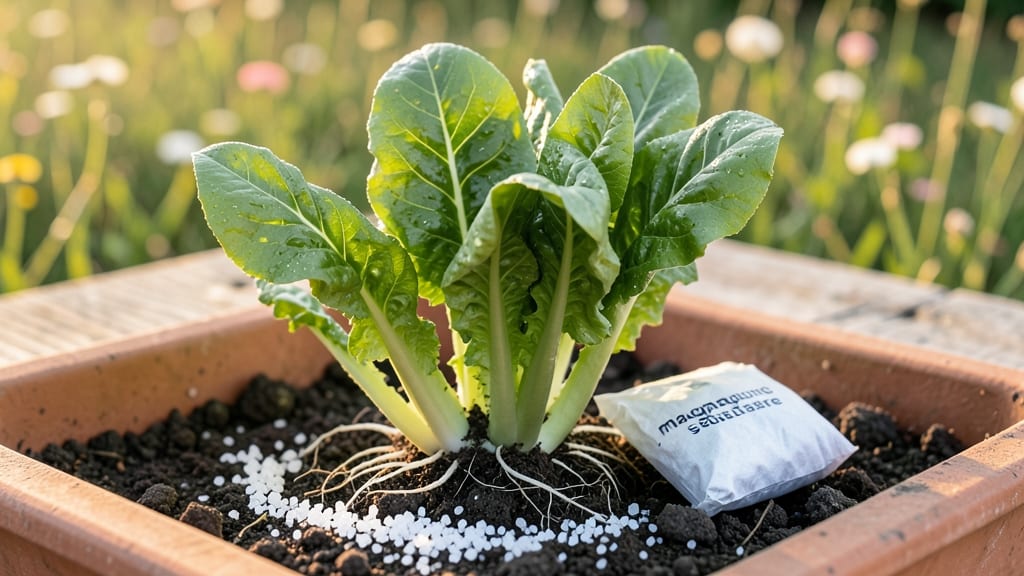
Magnesium for garden enhances plant growth by preventing yellowing between leaf veins (chlorosis) and improving photosynthesis, especially in acidic soils where deficiency is common. Apply Epsom salt (magnesium sulfate) or dolomitic lime as a soil amendment or foliar spray for best results.
Magnesium acts as the backbone of chlorophyll, the pigment that gives plants their green color and powers photosynthesis. 🌱 When your plants start showing yellow patches between veins—especially on older leaves—this is often the first sign of magnesium deficiency.
Unlike iron or manganese deficiencies, which cause yellowing on younger leaves, magnesium issues tend to appear gradually and worsen in acidic or sandy soils where nutrients leach away quickly.
For best results, I recommend testing your soil first to confirm the deficiency before applying treatments. Epsom salt works fast for quick fixes, while dolomitic lime provides long-term benefits by slowly releasing magnesium over time.
Organic options like kelp meal or wood ash are great alternatives for those who prefer natural amendments. Always follow package instructions for dosage—too much can be just as harmful as too little!
💡 In This Article
- How Magnesium Deficiency Affects Plant Health
- Best Magnesium Sources and Application Methods for Gardens
How magnesium deficiency affects plant health
Magnesium sits at the center of the chlorophyll molecule, acting as a catalyst that helps plants convert sunlight into energy during photosynthesis. Without enough magnesium, plants can't produce sufficient chlorophyll, leading to that classic yellowing between leaf veins called interveinal chlorosis.
This occurs because magnesium is mobile within the plant—when deficient, it gets relocated from older leaves to new growth, leaving the older foliage starved of its green pigment first. 🌿
The deficiency symptoms often start subtly with pale yellow patches on lower leaves, then progress to widespread yellowing while veins remain green. Unlike iron deficiency (which causes yellowing on younger leaves) or manganese deficiency (which produces brown spots), magnesium issues create a distinctive "lime-green" appearance between veins.
This happens because chlorophyll breaks down while other pigments remain intact. In severe cases, you'll notice stunted growth, weak stems, and poor fruit development.
Soil conditions play a huge role in magnesium availability. Acidic soils (pH below 6.0) and sandy soils with low organic matter accelerate magnesium leaching, making deficiencies more likely. Plants like tomatoes, peppers, and citrus are particularly sensitive because they're heavy feeders.
Even well-fertilized soils can develop magnesium shortages if they're heavily irrigated or contain high levels of potassium or calcium, which compete with magnesium uptake.
What most gardeners don't realize is that magnesium deficiency can mimic other problems. For example, nitrogen deficiency also causes yellowing, but it affects the entire leaf uniformly rather than just between veins.
The key difference is that magnesium-deficient plants often show these symptoms first on older leaves, while nitrogen-deficient plants turn yellow across all foliage. Testing your soil's cation exchange capacity (CEC) can reveal whether your plants are struggling to hold onto magnesium.
Magnesium's role extends beyond chlorophyll—it activates over 300 enzymes involved in plant metabolism, including those that help produce oils, proteins, and carbohydrates. When deficient, plants become stressed, their immune systems weaken, and they become more susceptible to pests and diseases.
This is why magnesium-deficient plants often show secondary symptoms like poor flowering or misshapen fruits, even when other nutrients appear adequate.
Here's what's actually happening at the cellular level: Magnesium ions (Mg²⁺) bind to chlorophyll molecules, stabilizing their structure during photosynthesis. Without enough magnesium, chlorophyll production slows, and existing chlorophyll molecules degrade faster.
The plant's energy production drops by as much as 50% in severe cases, which explains why magnesium-deficient plants often look weak and struggle to recover even when watered properly. 💫