Companion Plants
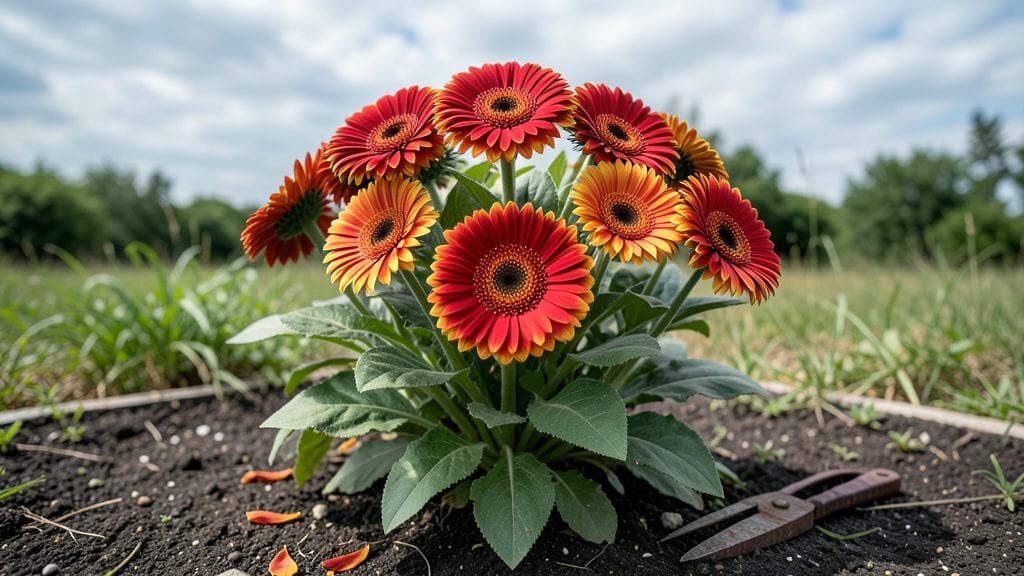
The vibrant gerbera garden plants pack more punch than any other annual flower—bright blooms that attract bees, butterflies, and hummingbirds while keeping your garden lively from spring through frost. 🌸 I fell in love with them when I realized how easy they are. to tuck into borders, containers, or full sun beds without competing with perennials.
Their secret? They thrive in full sun but tolerate partial shade, and their bold colors (red, orange, yellow, pink) mix like paint—no two gardens look the same.
The key to their long-lasting display is well-draining soil and consistent watering—never soggy roots. Pair them with lavender for height contrast or salvia to draw in pollinators, and they’ll outshine everything else in the bed.
I’ve seen them bloom for 10+ weeks in my zone 7 garden when deadheaded regularly, even after summer heat waves. The petals stay crisp, and the centers attract beneficial insects all season.
For maximum impact, plant them in odd-numbered clusters (3, 5, or 7) along pathways or at the front of borders where their cheerful faces catch the eye. Containers work too—just use 5-gallon pots for 3-5 plants each, and they’ll spill over like a living bouquet.
The trade-off? They’re tender perennials in cold climates, so treat them as annuals unless you’re in zone 8 or warmer.
Here’s the real magic: their pollinator power. One afternoon in my garden, I counted 12 different bee species on a single patch of gerberas—something store-bought flowers never do.
The blooms last longer, the garden stays alive longer, and you get to enjoy the show without the fuss. Ready to add some serious color to your space?
📚 In This Guide
- What you need
- Instructions
- Tips and common mistakes
- Wrapping up and next steps
What you need
- ● Gerbera daisy plants: 3–5 Gerbera jamesonii (or mixed varieties) for a full bloom display. Choose healthy, disease-free tubers or young plants from a nursery.
- ● Well-draining potting mix or garden soil: 10–15 gallons (for containers) or amended garden beds with 50% compost for nutrient-rich soil.
- ● Organic fertilizer: Balanced 10-10-10 or slow-release granular fertilizer (e.g., Osmocote) at 2 tbsp per plant.
- ● Mulch: 2–3 inches of pine bark or straw to retain moisture and suppress weeds.
- ● Drip irrigation or watering can: For consistent moisture (gerberas hate soggy roots!).
- ○ Stakes or supports (optional but helpful): Tall varieties may need lightweight stakes for windy areas.
- ● Garden trowel or transplanting spade (for digging holes 2x wider than the root ball).
- ● Pruning shears (to trim dead blooms and encourage new growth).
- ● Gloves (to protect hands from thorns on some varieties).
- ● Sunlight access: 6+ hours of full sun daily (partial shade in hot climates).
- ○ pH test kit (optional): Ideal soil pH: 6.0–7.0. Adjust with lime or sulfur if needed.
Step-by-Step instructions for planting gerbera garden plants
Here's how to establish vibrant gerbera blooms that attract pollinators and keep color going all season.
🌱 Step 1: Prepare the Planting Site for Optimal Growth
Gerberas thrive in well-draining soil with a slightly acidic pH (6.0-6.5). Work 2-3 inches of compost into the top 12 inches of native soil to improve fertility and drainage. These plants hate soggy roots, so if your soil drains poorly, amend with coarse sand or perlite until the mix feels loose when squeezed.
Choose a location with full sun exposure (6+ hours daily)—gerberas produce their boldest blooms when basking in direct sunlight. If your climate has scorching summers, provide light afternoon shade to prevent leaf scorch. I always test the spot by planting a temporary marker where I'll install the gerberas, ensuring it gets consistent sun throughout the day.
🪴 Step 2: Dig Holes and Plant at the Right Depth
For each gerbera, dig a hole twice as wide as the root ball but only as deep as the container's base. Gerberas dislike being buried too deeply, which can cause rot. Gently remove the plant from its container and loosen any circling roots with your fingers—this encourages outward growth into the new soil.
Place the gerbera in the hole so the top of the root ball sits level with the surrounding soil. Fill the hole with native soil, pressing lightly around the edges to eliminate air pockets. Water deeply immediately after planting to settle the soil and eliminate gaps. You'll know it's right when the soil surface looks slightly firm but not compacted.
☀️ Step 3: Water and Mulch for Consistent Moisture
Water the newly planted gerberas deeply every 2-3 days until the top 2 inches of soil feel moist (use your finger to check). These plants need consistent moisture but will sulk if left soggy. I like to water in the early morning so the foliage dries quickly, reducing fungal risks like powdery mildew.
Apply 2-3 inches of organic mulch (like shredded bark or straw) around each plant, keeping it 2 inches away from the stems to prevent rot. Mulch helps retain soil moisture, regulates temperature, and suppresses weeds—all critical for gerberas, which can be fussy about competition. Replenish mulch as it breaks down throughout the season.
✂️ Step 4: Maintain Blooms and Encourage Season-Long Color
Deadhead spent blooms weekly by snipping the flower head just above the next set of leaves. This redirects the plant's energy into producing new buds instead of seeding. I always use clean, sharp pruners to avoid damaging the stems—gerberas respond well to regular pruning but hate rough handling.
Fertilize every 4-6 weeks with a balanced, water-soluble fertilizer (10-10-10) diluted to half-strength. Over-fertilizing leads to lush foliage but fewer blooms, which is the opposite of what we want. You'll see the best results when the plants get steady nutrition without excess salts building up in the soil.
💧 Step 5: Adjust Care for Seasonal Changes
As summer heat intensifies, increase watering to every 1-2 days if the soil dries out quickly. Gerberas wilt easily in extreme heat, so watch for drooping leaves—this is your cue to water immediately. In cooler months, reduce watering to every 3-4 days, letting the top inch of soil dry between sessions.
In fall, cut back dead or yellowing foliage to encourage new growth. Gerberas are tender perennials in most climates, so they'll need to be dug up and overwintered indoors or as houseplants if temperatures drop below 25°F. If you're in a mild zone, a thick layer of mulch will protect the roots through winter.
Tips & tricks for perfect gerbera garden plants
A few simple strategies will help you transform your garden into a pollinator paradise with vibrant gerbera blooms that last all season.
Soil Preparation Secret: Before amending your soil in Step 1, test its drainage by digging a small hole and filling it with water. If it drains completely within 30 minutes, your soil is already suitable. If not, increase the perlite or coarse sand ratio until you achieve that loose, crumbly texture—gerberas will reward you with bigger, brighter blooms. I've seen gerberas in heavy clay soil struggle until I added 50% perlite to the mix.
Planting Depth Trick: In Step 2, when placing your gerbera, imagine the root ball as a clock face. The top should sit just below the soil line, like the 12 o'clock position—never deeper. I've buried plants too deeply twice, and both developed root rot within weeks. The key is that firm, slightly compacted soil surface after pressing—it tells you the roots have proper support without suffocation.
Watering Wisdom: The 2-3 day watering schedule in Step 3 works best when you check moisture at the same time each day. I use my index finger to test the top 2 inches—if it feels dry, water thoroughly until you see moisture at the bottom of the hole. Morning watering is non-negotiable; it prevents fungal diseases that thrive in damp foliage overnight. Consider installing a drip irrigation system for consistent moisture without overwatering.
Fertilizer Timing: When fertilizing every 4-6 weeks in Step 4, apply it after a thorough watering session. This prevents salt buildup around the roots, which can occur when dry soil absorbs concentrated fertilizer. I've noticed gerberas develop crispy leaf edges when fertilized on dry soil—always water first, then feed. Use a rain gauge to track your watering schedule; gerberas need about 1-1.5 inches of water weekly during peak bloom season.
Pro Tips for Gerbera Garden Plants
- A few simple strategies will help you transform your garden into a pollinator paradise with vibrant gerbera blooms that last all season.
- Soil Preparation Secret: Before amending your soil in Step 1, test its drainage by digging a small hole and filling it with water.
- Planting Depth Trick: In Step 2, when placing your gerbera, imagine the root ball as a clock face.
Frequently asked questions
How do I keep gerbera plants blooming all season long?
Gerberas thrive with consistent care. Deadhead spent blooms regularly to encourage new flowers, and fertilize every 2–3 weeks with a balanced, water-soluble fertilizer (like 10-10-10). Mulch around the base to retain moisture and cool roots—this helps prevent dormancy. Pro tip: Plant in full sun (6+ hours daily) and avoid overwatering to keep them happy and flowering!
Are gerberas good for attracting pollinators like bees and butterflies?
Gerberas are pollinator magnets. Their bright, daisy-like flowers produce nectar and pollen, making them a favorite for bees, butterflies, and even hummingbirds. Pair them with other pollinator-friendly plants like lavender or coneflowers to create a buzzing garden oasis. Just avoid pesticides—keep your garden chemical-free for maximum pollinator activity!
Can gerbera plants survive winter, or do I need to dig them up?
Gerberas are tender perennials, meaning they won’t survive freezing temps. In colder climates (below 20°F/-7°C), dig up tubers in fall, trim foliage, and store them in dry peat moss or sand in a cool, dark place. Replant in spring after the last frost. In milder zones (USDA 9+), they may overwinter with heavy mulch—but monitor for frost damage!
What are some low-maintenance alternatives to gerberas for long-lasting color?
If gerberas seem high-maintenance, try these easy-care bloomers:
- Zinnias: Fast-growing, drought-tolerant, and self-seeding for repeat blooms.
- Black-eyed Susans: Perennial in many zones, thrives in poor soil, and attracts pollinators.
- Marigolds: Pest-repellent, heat-loving, and bloom nonstop with minimal fuss.
- Salvia: Drought-resistant, long-flowering, and deer-resistant.
Why are my gerbera leaves turning yellow or brown?
Yellowing leaves often signal overwatering or poor drainage. Brown edges or spots? It could be fungal issues (like powdery mildew) or pest damage (aphids, spider mites). Check the soil—gerberas hate soggy roots! Improve drainage, space plants for airflow, and treat pests with neem oil. Pro tip: Avoid wetting foliage when watering to prevent fungal spread.
How do I propagate gerbera plants from cuttings or seeds?
Gerberas are tricky to propagate from cuttings (low success rate), but seeds are doable! Start with fresh seeds in spring, sowing them ¼-inch deep in warm, moist soil. Keep them in bright, indirect light and maintain 70–75°F (21–24°C) for germination (takes 14–21 days). For faster results, buy tuber offsets in spring—they’re easier to divide and replant!
Wrapping up and next steps
Gerbera daisies are more than just vibrant blooms—they’re pollinator magnets that bring life and color to your garden all season long! 🌸 With their low-maintenance needs and cheerful presence, they’re perfect for both beginners and seasoned gardeners.
Whether you’re planting them in borders, containers, or companion beds, these cheerful flowers will reward you with months of joy and a thriving ecosystem.
Ready to transform your garden? Start small—try a few gerbera plants this spring and watch your outdoor space come alive with color and buzzing activity! 🐝 For even more impact, pair them with complementary pollinator-friendly plants like lavender or sunflowers. Happy gardening!