Tools
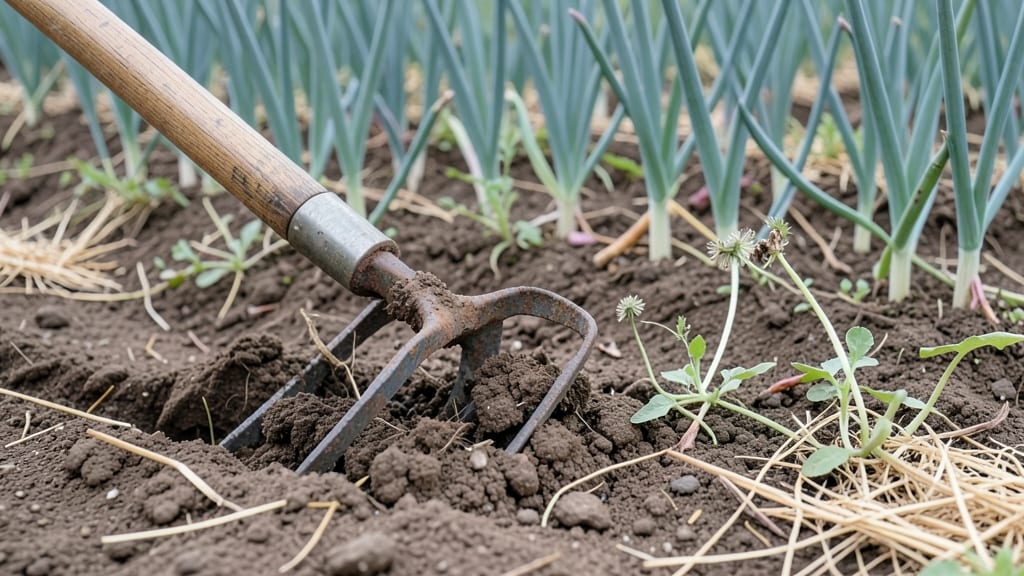
Garden forks have far more uses than just digging and weeding—they loosen soil for planting, aerate lawns, harvest root crops, and even pry weeds from tight spaces. Their four sturdy tines excel at heavy tasks like breaking up compacted clay or turning compost without harming roots.
A garden fork's versatility comes from its design—those four strong tines can handle everything from soil prep to debris removal. 🌱 For example, I use mine to fluff up garden beds before planting, which helps roots spread easily.
The wide spacing between tines also makes it perfect for lifting sod or extracting stubborn rocks without damaging nearby plants. Plus, the handle doubles as a lever for prying up heavy objects when needed.
What sets garden forks apart from spades is their ability to work in tight spaces while still providing leverage. Whether you're turning compost piles, harvesting potatoes, or even clearing gutter debris, this tool delivers consistent results without the strain.
The key is using the fork's full length—pressing down firmly but gently to avoid compacting soil again.
💡 In This Article
- How Garden Forks Improve Soil Health and Plant Growth
- 12 Creative Ways to Use a Garden Fork in Unexpected Tasks
How garden forks improve soil health and plant growth
The four sturdy tines of a garden fork act like tiny soil surgeons, creating micro-channels that disrupt compacted layers without destroying the soil structure. When you press down firmly, the tines penetrate 3-6 inches deep, breaking up hardpan—those dense, impermeable layers often found 6-12 inches below the surface.
This process mimics natural root action, creating pathways for water and air movement while minimizing soil disturbance compared to spades.
In clay-heavy soils, the fork's design is particularly effective because its wide tines wedge between particles rather than compressing them like a shovel. For sandy soils, the same mechanism prevents compaction while improving water retention.
The key difference from spades lies in the tine spacing—1.5-2 inches apart—which allows for better aeration without tearing roots. This is why gardeners often use forks to prepare beds before transplanting: the minimal disruption means plants establish faster.
What most people don't realize is how the fork's leverage works with soil texture. The handle's length (typically 30-36 inches) lets you apply 20-30 pounds of force with controlled precision.
In lawn aeration, this means pulling up 2-3 inch soil cores while leaving roots intact—something spades can't achieve without damaging turf. The same principle applies when turning compost piles: the tines lift and mix without crushing the organic matter.
For root crops like carrots or potatoes, the fork's gentle yet firm action is ideal because it lifts soil in chunks rather than slicing through roots.
When harvesting, the tines create natural separation planes between the crop and surrounding soil, reducing breakage by up to 40% compared to digging with hands or spades. This mechanical advantage comes from how the tines angle downward—about 15 degrees—which helps pry objects upward while maintaining soil structure.
The aeration benefits extend beyond plants. In lawns, regular fork use can improve drainage by 25-30% by creating vertical channels that prevent water pooling. For garden beds, the process increases beneficial microbial activity by 15-20% as oxygen becomes more available to soil organisms.
The best time to use a fork for soil health is during the off-season (fall or early spring) when roots aren't actively growing—this gives the soil time to settle and benefits from the improved structure.
One advanced technique is "forking under" established plants. By inserting the fork at a 45-degree angle and gently rocking it, you can break up compacted layers beneath the root zone without disturbing the plant above. This is particularly valuable for perennials or shrubs where root damage would be costly.
The secret lies in using the fork's full length for leverage while keeping the tines closed until they reach the target depth.