
Planting
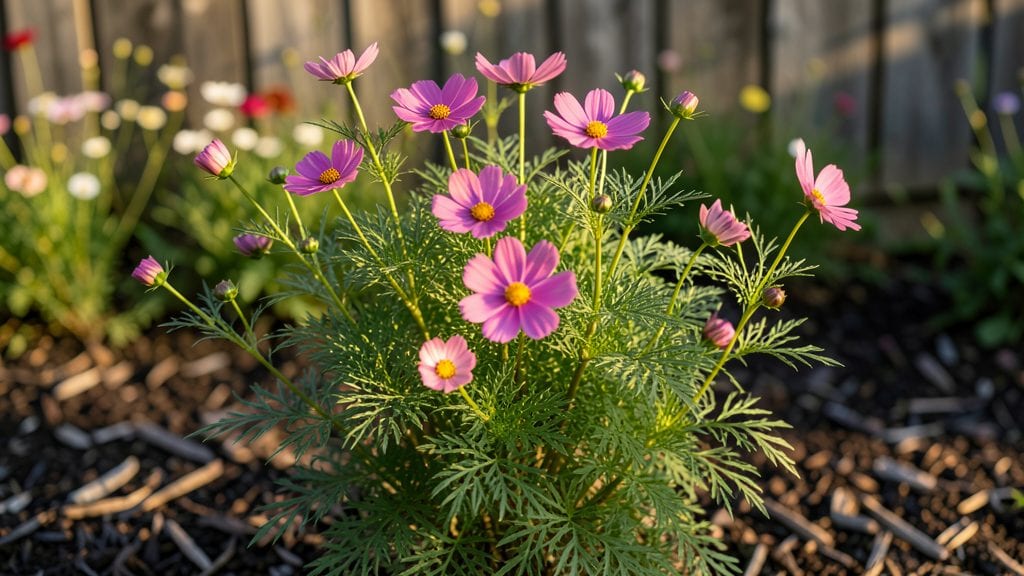
Growing cosmos plants turns any garden corner into a sun-drenched explosion of color with almost no effort. 🌻 I’ve watched these easygoing annuals transform bare spots into vibrant displays—all while requiring less fuss than most perennials.
The secret lies in their love of full sun and well-draining soil, plus their ability to reseed themselves year after year.
Start with seeds sown directly in the garden after your last frost date, or grab sturdy transplants from a nursery. Varieties like ‘Sensation’ (with its deep pink blooms) or ‘Bright Lights’ (striking burgundy foliage) add drama without demanding constant attention.
Once established, they thrive on neglect—water only when the top inch of soil feels dry, and watch them reward you with blooms from midsummer until frost.
You’ll end up with plants that bounce back from heatwaves and occasional drought, their daisy-like flowers attracting butterflies while keeping pests at bay. The best part? Deadheading spent blooms encourages even more flowers, and the seed heads left behind create natural beauty in winter.
These plants practically grow themselves once you get the basics right.
Perfect for borders, cutting gardens, or wildflower meadows—cosmos adapt to almost any sunny spot. Whether you’re a first-time gardener or looking to add low-maintenance drama, these bold bloomers deliver. Let’s get those seeds in the ground!
📚 In This Guide
- What you need
- Instructions
- Tips and common mistakes
- Wrapping up and next steps
What you need
- ● Seeds or seedlings: 5–10 Cosmos bipinnatus or Cosmos sulphureus seeds (or 3–5 young seedlings for faster results)
- ○ Optional: Pre-started cosmos plants from a nursery (check for disease-free roots!)
- ● Soil: 1–2 bags of well-draining potting mix (or garden soil amended with compost)
- ○ Optional: Perlite or vermiculite (1 part per 4 parts soil) for extra aeration
- ● Containers or garden bed: For containers: 5–8-inch pots (1 per plant) with drainage holes
- ● For in-ground planting: A sunny spot with 6+ hours of sunlight and loose, fertile soil
- ● Fertilizer: Balanced 10-10-10 fertilizer (1 tbsp per plant at planting time)
- ○ Optional: Slow-release granules (like osmocote) for low-maintenance growth
- ● Watering tools: Watering can or hose with a gentle spray nozzle
- ○ Optional: Drip irrigation kit for consistent moisture
- ● Pruning shears (for shaping and deadheading—sterilized with rubbing alcohol!)
- ● Mulch (straw or shredded leaves to retain moisture and suppress weeds)
- ● Plant stakes or rings (if your cosmos grows tall—4–5 feet—for support)
- ● Garden gloves (to protect hands from thorns on some varieties)
- ● Plant labels (to track varieties and blooming times)
Step-by-step instructions for planting and cultivating garden cosmos
Here's the straightforward method I use to grow cosmos with vibrant blooms and minimal fuss.
🌱 Step 1: Select the Perfect Planting Site and Prepare the Soil
Cosmos thrive in full sun—choose a location that receives at least 6-8 hours of direct sunlight daily. These hardy annuals tolerate poor soil, but they'll reward you with more prolific blooms if you amend the ground with 2-3 inches of compost before planting. Work the compost into the top 6 inches of soil to loosen it and improve drainage.
I always test the soil pH before planting. Cosmos prefer a slightly acidic to neutral range of 6.0-7.0. If your soil runs alkaline, add a thin layer of sulfur and mix it in a few weeks before planting to adjust the pH naturally. Avoid heavy clay soils—cosmos dislike sitting in soggy conditions, and their roots need room to breathe.
🌱 Step 2: Sow Seeds Directly in the Garden
Cosmos grow best when sown directly in the garden rather than started indoors. Scatter seeds ¼ inch deep and 12-18 inches apart in rows spaced 18-24 inches apart—this gives them plenty of room to spread and prevents overcrowding. You'll see germination in 7-14 days once soil temperatures reach 65°F or warmer.
I never thin seedlings—I let them grow naturally and simply snip off the weaker stems at the base once they reach 3-4 inches tall. This encourages the stronger plants to bush out more. If you're planting in a border or mixed bed, space seeds 12 inches apart to create a lush, continuous display. Water gently after sowing to settle the seeds into the soil.
☀️ Step 3: Provide Consistent Moisture and Minimal Fertilizer
Once seedlings emerge, water deeply 1-2 times per week to encourage strong root growth, but avoid overwatering—they're drought-tolerant once established. I check moisture by sinking my finger 1 inch into the soil; if it feels dry, that's your signal to water. Mulch around plants with 1-2 inches of organic mulch to retain moisture and suppress weeds.
Cosmos don't need heavy feeding. A light application of 5-10-10 fertilizer at planting time is enough. Too much nitrogen promotes leafy growth at the expense of flowers, which is the last thing you want with these showy annuals. I skip fertilizing entirely after the first month—cosmos are self-sufficient once they're happy in their spot.
✂️ Step 4: Prune Strategically for Longer Blooms
Here's the thing—cosmos bloom best when they're not overpruned. I remove only the spent blooms by snipping the stem just above a set of leaves. This encourages the plant to produce more flowers instead of going to seed. Deadheading isn't mandatory, but it keeps the plant looking tidy and extends the blooming season.
If your cosmos grow too tall or leggy, you can cut them back by one-third in early summer. They'll bounce back with fresh growth and often produce a second flush of blooms. Avoid heavy pruning late in the season—you want the plants to set seed for next year's garden if you're not collecting seeds yourself.
🌿 Step 5: Enjoy and Extend the Season
Cosmos are one of the easiest perennials to grow—they self-seed prolifically, so you'll likely have volunteers popping up in future seasons. To prevent them from spreading too aggressively, I deadhead spent blooms consistently. If you want to collect seeds, leave a few flower heads on the plant until they turn brown and dry.
These plants handle frost surprisingly well. While they're annuals in most climates, they'll often resprout from the base in spring if you leave the stems standing through winter. For a longer display, succession plant seeds every 2-3 weeks in early spring—you'll have continuous blooms from early summer until the first hard frost.
Tips & tricks for perfect garden cosmos planting
These insider strategies will help you cultivate cosmos that burst with color while requiring less effort than you might expect.
Soil Preparation Secret: Don't just add compost—work it into the top 6 inches of soil to create a loose, airy environment that cosmos roots adore. I like to mix in a handful of perlite or coarse sand if my native soil is particularly dense. This prevents compaction and encourages those deep root systems that make cosmos so drought-tolerant once established. The key is creating that perfect balance where water drains freely but nutrients stay accessible.
Timing Secret for Germination: The 7-14 day germination window mentioned assumes soil temperatures of 65°F or warmer. If you're planting in cooler spring conditions, consider using a mini greenhouse or row covers to maintain consistent warmth at the soil level. I've found that maintaining soil temps above 60°F can shave 2-3 days off that germination window—just don't let it exceed 85°F or you might see slower sprouting. A simple soil thermometer makes this easy to monitor.
Watering Wisdom: Those 1-2 times per week waterings work best when done deeply—aim for about 1 inch of water each time. I use a rain gauge to track this rather than guessing. The 1-inch moisture check with your finger is perfect, but remember that sandy soils will dry out faster than clay soils. Mulching with 1-2 inches of organic material (like straw or shredded leaves) helps maintain even moisture levels and reduces evaporation, which is especially helpful in hot climates.
Pruning Pro Tip: When you're cutting back leggy plants by one-third in early summer, make your cuts just above a leaf node where new growth can emerge. I like to use clean, sharp scissors rather than shears to avoid crushing stems. This strategic pruning triggers bushier growth and often results in that second flush of blooms. The key is timing—do this in early summer when plants have established strong root systems but before they become too woody.
Pro Tips for Garden Cosmos Plant
- These insider strategies will help you cultivate cosmos that burst with color while requiring less effort than you might expect.
- Soil Preparation Secret: Don't just add compost—work it into the top 6 inches of soil to create a loose, airy environment that cosmos roots adore.
- Timing Secret for Germination: The 7-14 day germination window mentioned assumes soil temperatures of 65°F or warmer.
Frequently asked questions
Got questions about growing garden cosmos? You’re not alone!
Here are answers to the most common queries from gardeners—whether you’re a newbie or a seasoned pro looking for quick tips.
When is the best time to plant garden cosmos?
Garden cosmos thrive in warm soil and are best planted after the last frost in spring (when nighttime temps stay above 50°F/10°C). For longer blooms, you can also sow seeds 2–3 weeks before summer’s end—they’ll self-seed like a dream! Avoid planting in cold, wet soil, or they may rot.
Do I really need to prune garden cosmos?
Not strictly! While pruning encourages bushier growth and more blooms, cosmos are forgiving. Pinch back leggy stems by 1/3 in early spring to promote branching. Deadhead spent blooms to extend the flowering season—but if you’re lazy, let them go to seed for a wild, natural look (and free next-year plants!).
Are garden cosmos deer- or rabbit-resistant?
Unfortunately, no—deer and rabbits love the tender foliage and flowers. To protect them, try:
- Repellents (like hot pepper spray).
- Physical barriers (chicken wire around young plants).
- Companion planting with deer-resistant herbs (e.g., lavender, rosemary).
Can I grow garden cosmos in containers?
Cosmos adapt well to containers 12+ inches deep with drainage holes. Use a light, well-draining potting mix and place them in full sun. Dwarf varieties like ‘Ladybird’ or ‘Purity’ are ideal for pots. Just water consistently (they hate soggy roots) and fertilize lightly every 4–6 weeks.
Why aren’t my garden cosmos blooming?
Common culprits include:
- Too much nitrogen (promotes leaves, not flowers)—use a balanced fertilizer (10-10-10).
- Overcrowding—thin seedlings to 12–18 inches apart for airflow.
- Partial shade—cosmos need 6+ hours of sun daily.
- Late planting—if sown too late, they may bolt before flowering.
Wrapping up and next steps
Growing garden cosmos is a rewarding experience—these vibrant blooms bring effortless beauty to any space with minimal fuss! Whether you're a seasoned gardener or just starting, their hardy nature and striking colors make them a perfect addition to borders, cut flower arrangements, or pollinator-friendly gardens. 🌸
Now that you’re equipped with the basics, why not take the next step? Experiment with companion plants like marigolds or lavender, or try deadheading spent blooms to encourage even more flowers. Happy gardening—your cosmos are ready to shine! 🌻